Guide 4 min read
Holiday lights without the ladder
What a do-it-yourself display really takes, what full-service installation covers, and how to hand off the ladder this year.
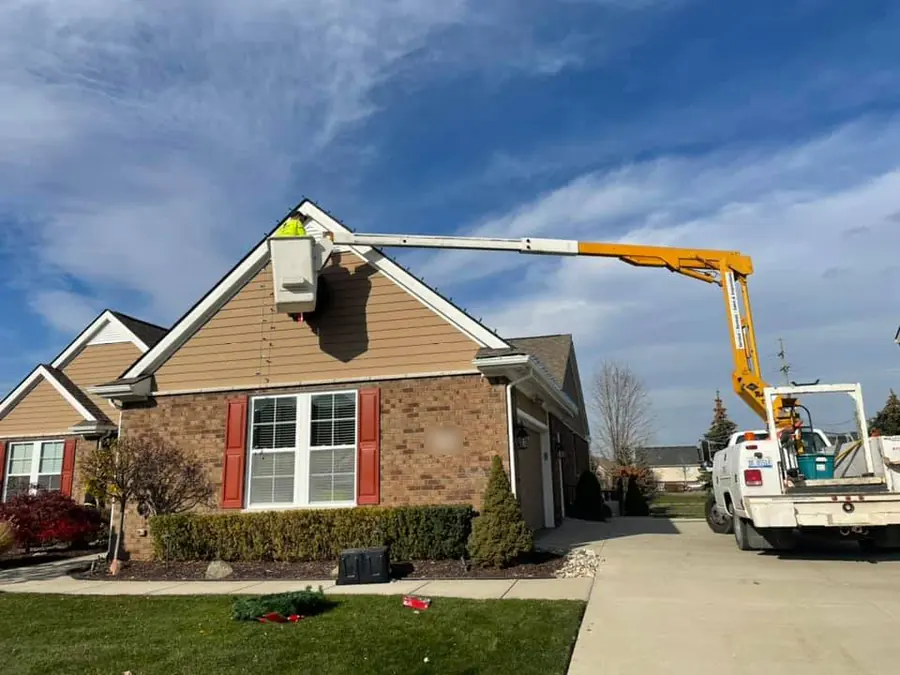
What a DIY display really takes
On paper, putting up Christmas lights is a Saturday project. In practice, it starts with finding last year's strands in the garage, testing them, making another run to the store and working out how to reach the peak over the garage. Then comes the ladder, the clips and the cold.
The second half of the job is easy to forget. The lights have to stay up through snow and wind, and sometimes a strand goes dark in the middle of December. After the holidays, everything has to come down again, usually on a day nobody wants to be outside.
Add it up and a modest display can eat into more than one weekend across the season, plus the evenings spent troubleshooting a strand that will not light. For a lot of homeowners, that time is the real cost.
Where DIY goes wrong
Ladders on frozen ground, wet shingles and second-story peaks are where the real risk is. Holiday lights are not worth a fall. Rooflines also tend to look homemade when the spacing drifts, the strands sag between clips and the whites do not match from one box to the next.
Then there is power. Too many strands on one outlet trips breakers, extension cords end up across walkways and timers get forgotten. None of it is hard to fix, but it takes time most people do not have in December.
Finally, there is the house itself. Leaning a ladder against gutters can bend them, and fasteners that go into shingles or trim can leave marks long after the lights are gone. A careful installer plans how lights attach to each surface before anything goes up.
What full-service installation covers
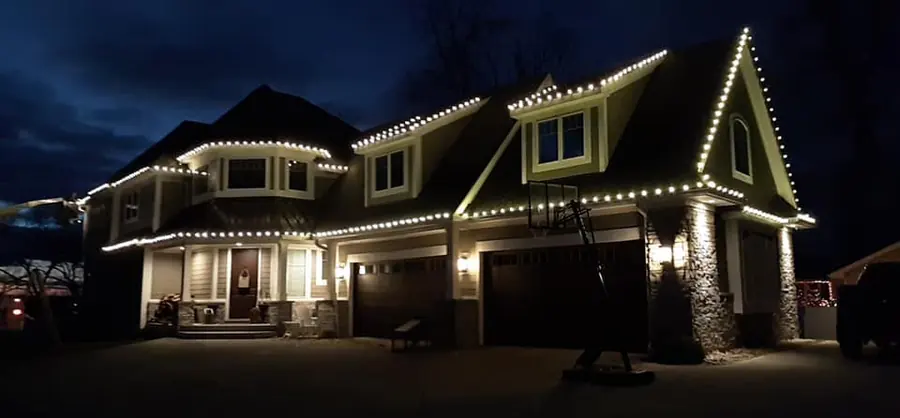
With professional Christmas light installation, you describe the look and the crew handles the rest. That means designing a layout around your roofline, trees and entry, installing it with even spacing and clean lines, and testing it before leaving.
It also covers the season. If a section goes dark, you make a call instead of climbing. After the holidays, the crew comes back for takedown. Your estimate spells out what is included, so you know what to expect from the first visit to the last.
Crews with bucket trucks can reach tall trees and steep peaks that are unsafe from a ladder. That high work is often where a display gets its biggest impact.
What you still get to decide
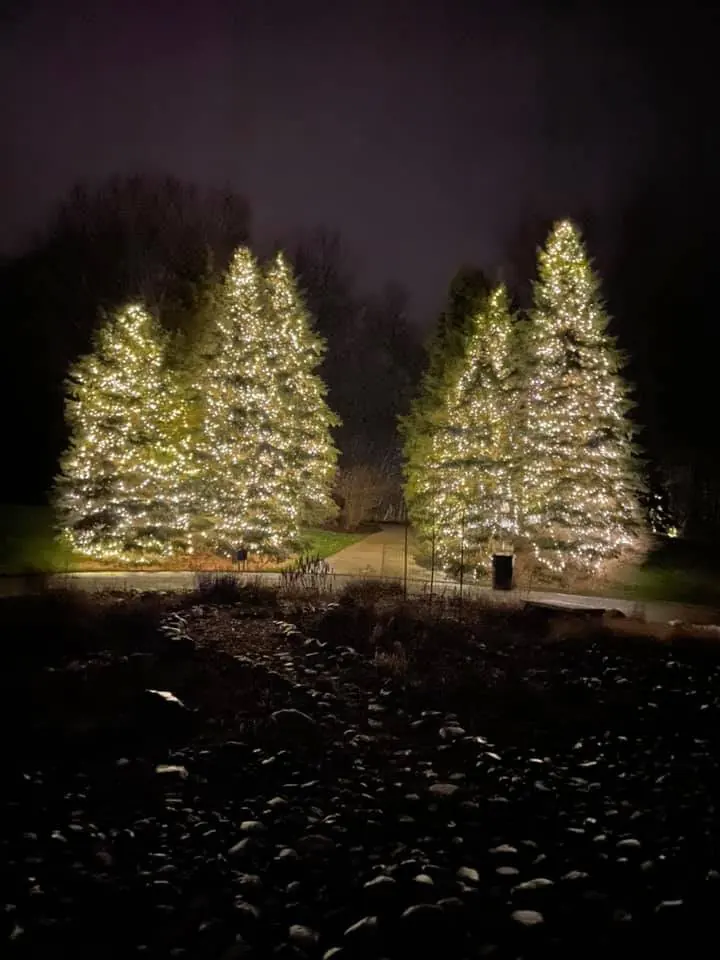
Hiring out the work does not mean giving up the look. You decide warm white or multicolor, just the roofline or the trees too, and how the display should feel from the street. Some homeowners want a quiet, classic outline. Others want every tree wrapped to the top.
If you have ideas from photos or from a house you admire on your street, share them. A good installer will tell you what will work on your home, what to leave out and where a little restraint looks better than more lights.
You also decide the scale. A sensible first year is the front roofline and the trees closest to the street. If you love the result, add the side of the house, the backyard or the bistro lights over the patio next season. The design can grow with you, one year at a time.
How to get started
Start early. Installs commonly run from October into early December, and earlier requests get more choice of dates.
Before you hire anyone, ask a few simple questions. What exactly is included? How does in-season service work if something goes dark? When does takedown happen? How will the lights attach to your roof and gutters? How will the crew reach the high sections? Clear answers tell you a lot about how the season will go.
Walk around your house at dusk and note what you want lit and where your outdoor outlets are. Then call or send a request with your address. Estimates are free. The only ladder you will need this year is the step stool for the star on the tree.