Guide 4 min read
Planning commercial holiday lighting: a practical guide
For property managers, HOA boards and downtown teams: how to plan a display that looks deliberate, stays lit and runs on schedule.
Start with what the lighting has to do
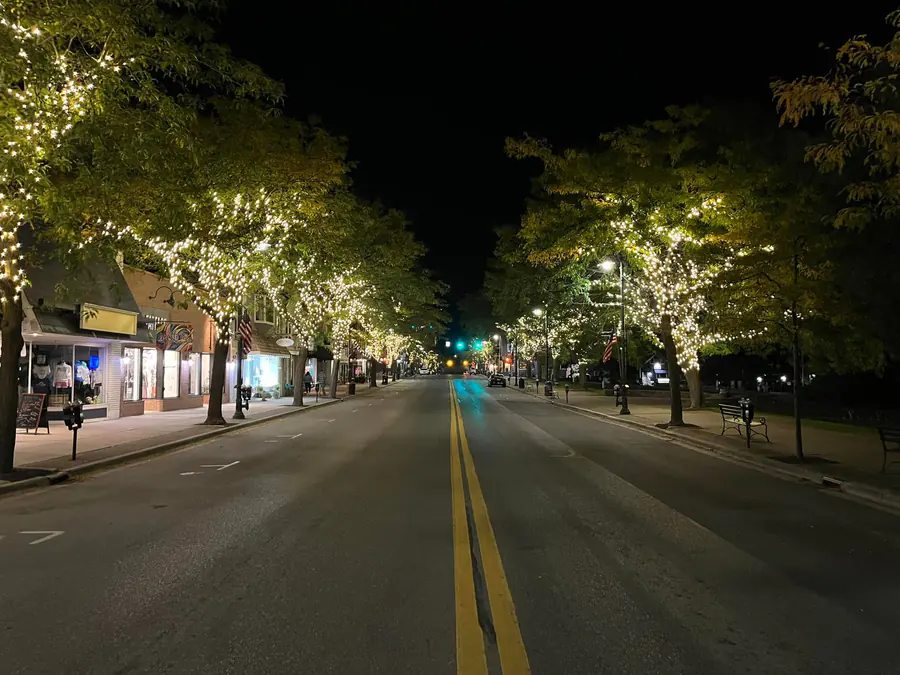
Commercial holiday lighting always has a job. A shopping center wants drivers to notice it from the road. A downtown wants people to stay for dinner after the tree lighting. An HOA wants residents to feel good pulling into the neighborhood. An office wants clients and employees to see a property that looks cared for.
Write down the job before anything else. It decides where the lighting goes, how much of the property needs it and what can wait for a future season. It also gives everyone involved, from the board to the installer, the same goal to measure the design against.
Look at the property at night
A property looks different after dark. Drive the main approach at night. Walk from the parking lot to the entrance. Notice what is already lit, what disappears and what catches your eye first. The buildings, trees and poles you notice at night are usually the ones worth lighting.
Take a few photos from the spots that matter most: the main road, the parking lot, the front door and any gathering space. Those photos make the walkthrough faster and help everyone agree on what the display needs to accomplish.
Then schedule a walkthrough with your installer. A good walkthrough covers the buildings, trees, poles and entrances, and turns them into a concept design and an estimate you can take to a board or an owner.
Power, access and safety
Commercial displays involve longer runs and more power sources than a home. Know where the exterior outlets are, which circuits they share and whether some areas have no power at all. Your installer should map this during the walkthrough and plan the design around it.
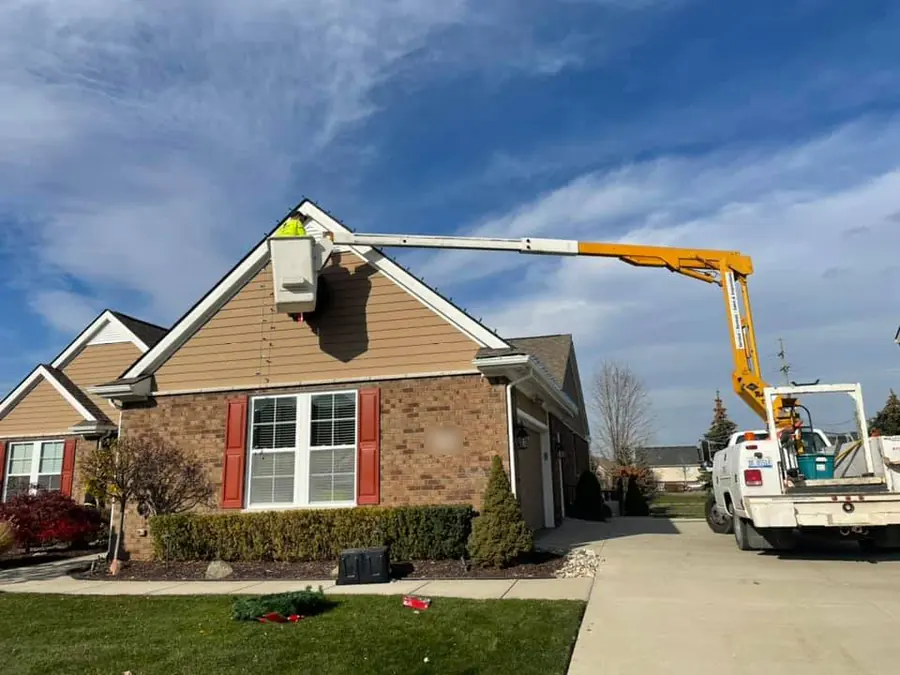
Access matters just as much. Bucket trucks need somewhere to park, and lift work near entrances, sidewalks and traffic has to be planned. Point out loading zones, fire lanes, soft ground, irrigation and anything overhead, so installation day does not turn into problem solving.
Name one person on your side as the contact for the season. Installers need someone who can answer questions about access, approve small changes on site and report a section that goes dark. When that role is clear, everything else moves faster.
Approvals, budgets and timing
Boards, downtown development authorities and ownership groups meet on their own calendars. Build approval time into your plan. Starting the conversation in late summer or early fall leaves time to share a concept, adjust it and still land a good install date.
Budgets go further when you prioritize. Light what people see first, then add depth over time. A plan that grows over a few seasons often looks more deliberate than one that tries to do everything in year one.
Give decision makers something concrete. A concept design, a clear list of what gets lit and a written estimate make approval far easier than a general description and a total.
Schedule around the business
Installation and removal should work around store hours, deliveries, events and parking. Share those details early. Your installer can then plan crew days and lift work around your busiest times and confirm the schedule before anyone arrives.
If the property hosts a tree lighting, a holiday market or a grand opening, put the date in writing at the start. Working backward from a fixed event is the simplest way to keep a commercial install on track.
Plan the whole season, not just install day
A display is only as good as it looks in the middle of December. Ask how in-season service works, who to call when a section goes dark and when removal happens after the holidays. Your estimate should spell out what is included, from design to takedown.
Finally, keep a record of what worked. Photos from this season make next year's planning faster, and a design that works can be repeated with small changes.
If you manage several buildings or blocks, keep the look consistent. Mixing warm and cool whites, or lighting one building fully and the next one halfway, reads as unplanned from the street. One design language across the property makes the whole place feel intentional.